


 EDITORS' CHOICE
 Epstein File Explorer
EDITORS' CHOICEBrowse and search public court document archives in a structured, searchable interface.
Try Epstein File Explorer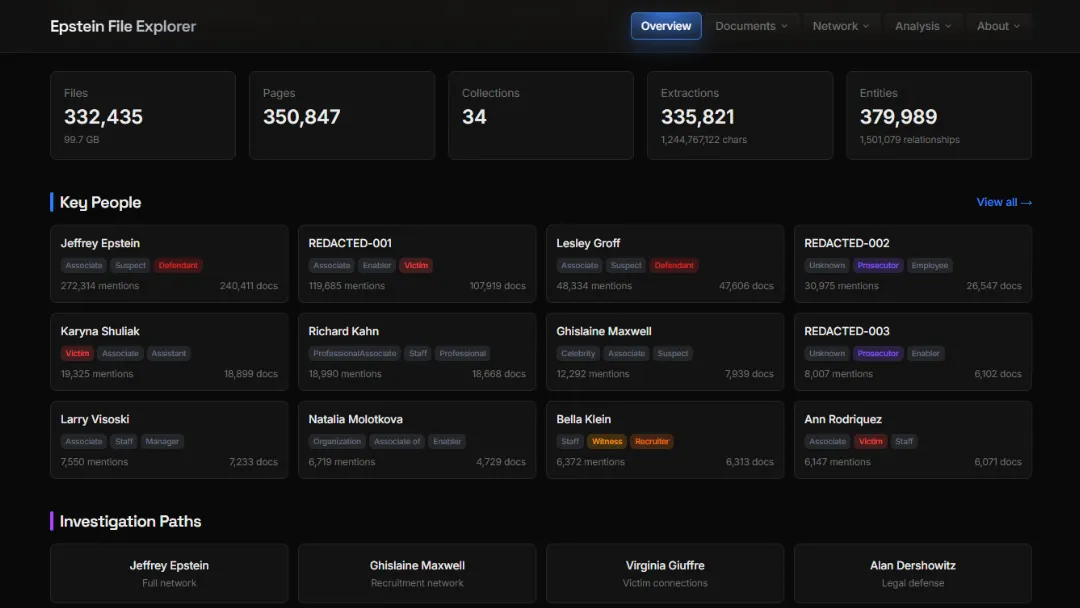
What is Epstein File Explorer?
Try Epstein File ExplorerEpstein File Explorer is a web-based data exploration platform built around publicly released court documents and investigative records related to the Jeffrey Epstein case. It organizes a large collection of legal files, emails, flight logs, financial records, and related materials into a searchable knowledge graph-style interface.
The goal of the platform is to make complex and scattered public records easier to navigate by providing tools such as full-text search, entity linking, document browsing, and cross-referencing between people, places, and documents. It is designed primarily for researchers, journalists, and members of the public who want to explore structured information extracted from legal archives in a more usable and interconnected format.
- Full-Text Search: Search across thousands of documents, emails, and records using keywords or phrases.
- Entity Linking: Automatically connects people, organizations, and locations across multiple documents.
- Document Browser: Explore structured court filings, logs, and investigative materials in organized collections.
- Relationship Mapping: Visualize how different entities (people, organizations, etc.) are connected.
- AI Integration (MCP Support): Allows connection to AI assistants for querying the dataset programmatically.
- Cross-Reference Navigation: Click between linked entities and documents to trace connections easily.
- Journalistic Research: Investigate public court records and build stories based on primary documents.
- Academic Study: Analyze legal, political, or social patterns in publicly available case files.
- Data Exploration: Navigate large-scale document collections in a structured and searchable way.
- Entity Relationship Analysis: Study how individuals and organizations are connected across records.
- Legal Transparency Review: Examine released government and court documents for public accountability.
- AI Data Integration: Use the dataset as a structured source for AI-driven querying and analysis.